
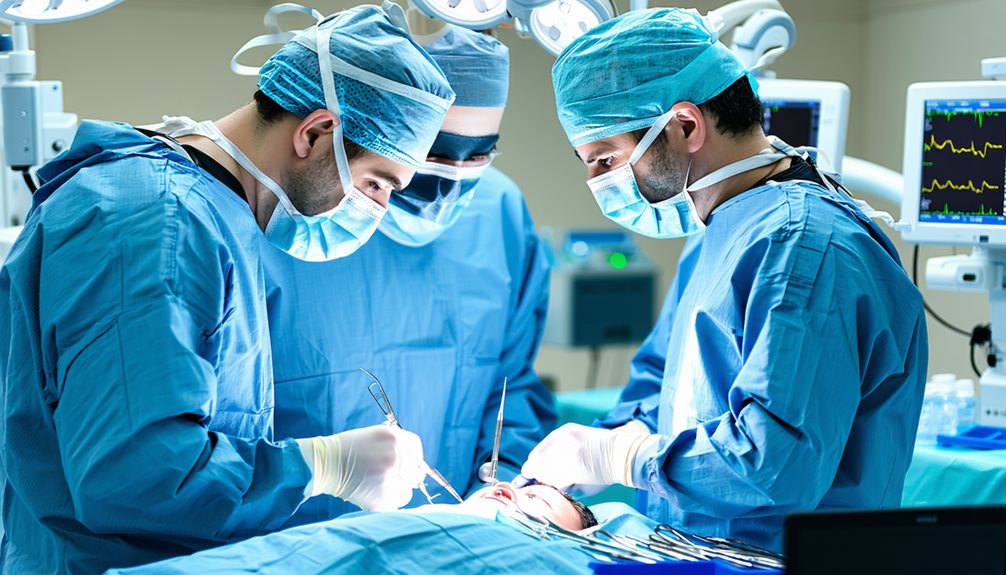
Finding the best oral surgeons for cleft palate repair necessitates a critical assessment of their credentials, including board certification in oral and maxillofacial surgery and additional certifications in pediatric or craniofacial surgery. Surgeons skilled in advanced techniques like Furlow double-opposing Z-plasty demonstrate optimized surgical outcomes. High case volumes and low complication rates are markers of proficiency. Clinics noted for excellence in multidisciplinary care leverage cutting-edge diagnostics and collaborate across specialties. Success stories underline significant patient improvements in speech and feeding efficiency post-surgery. A thorough examination of these factors can reveal more about the specialists and their capabilities.
Renowned Surgeons in the Field
How does one identify the most esteemed professionals in the intricate field of cleft palate repair? The process necessitates an evaluation of surgeons who have attained global recognition through their contributions to surgical advancements and patient outcomes.
These leading experts are distinguished by their extensive experience, innovative techniques, and a robust portfolio of peer-reviewed publications that address complex surgical challenges associated with cleft palate anomalies.
To discern such distinguished professionals, one must consider their involvement in renowned research institutions and their participation in international symposia where cutting-edge methodologies are discussed.
Surgeons who have received accolades from reputable surgical societies often demonstrate a commitment to not only improving surgical outcomes but also contributing to the body of knowledge through pioneering research.
Moreover, patient reviews and case studies published in medical journals provide quantifiable evidence of a surgeon’s proficiency in cleft palate repair.
The synthesis of these elements—academic contributions, clinical expertise, and peer evaluations—forms the foundation for identifying preeminent surgeons in this specialized field.
Consequently, the pursuit of excellence in cleft palate repair is guided by the recognition of those who lead with innovation and are esteemed by their global peers.
Top Clinics for Cleft Palate
Identifying the top clinics for cleft palate repair involves analyzing facilities that demonstrate excellence in multidisciplinary care, state-of-the-art technology, and innovative treatment protocols.
Top-rated facilities prioritize a collaborative approach, integrating specialists from various fields such as maxillofacial surgery, pediatrics, speech therapy, and orthodontics to optimize patient outcomes. These clinics employ cutting-edge diagnostic tools, including 3D imaging and digital modeling, which enhance precision in preoperative planning and postoperative evaluations.
In reviewing treatment options, leading clinics offer extensive care plans tailored to individual patient needs. This includes advanced surgical techniques like minimally invasive endoscopic procedures that reduce recovery time and postoperative complications.
Additionally, these clinics invest in ongoing research and development, guaranteeing access to the latest therapeutic modalities and enhanced surgical methods. Facilities recognized for their excellence often participate in clinical trials, contributing to the evolution of cleft palate repair techniques and outcomes.
Their commitment to education and training guarantees that the clinical staff remains at the forefront of innovation. By prioritizing patient-centered care and leveraging technological advancements, these top-rated facilities set benchmarks in cleft palate treatment, offering hope and improved quality of life for affected individuals worldwide.
Expertise in Pediatric Surgery
Expertise in pediatric surgery is characterized by specialized training that equips surgeons with the skills necessary to address the unique anatomical and physiological considerations of children.
Surgeons with advanced pediatric training employ child-friendly surgical techniques that minimize trauma and promote ideal healing outcomes.
Evidence suggests that such expertise not only enhances surgical success rates but also contributes to improved long-term functional and aesthetic results for cleft palate repairs.
Specialized Pediatric Training
Steering through the complexities of cleft palate repair requires oral surgeons to possess specialized pediatric training, ensuring they are well-equipped to address the unique anatomical challenges and developmental considerations inherent in pediatric surgery.
This specialized training encompasses a thorough understanding of pediatric anesthesia techniques, essential for minimizing risks and enhancing outcomes in young patients. Such expertise enables surgeons to tailor their approach to the physiological nuances and developmental stages of pediatric patients, thereby fostering optimal surgical outcomes.
To illustrate the importance of specialized pediatric training, consider the following elements:
-
Anatomical Precision: Surgeons with specialized training are adept at maneuvering through the intricate anatomical structures of the developing child, ensuring precise surgical interventions that accommodate growth and development.
-
Pediatric Anesthesia Proficiency: Mastery of pediatric-specific anesthesia protocols is vital to manage the distinct physiological responses of children, thereby enhancing safety and comfort during surgery.
-
Growth-Oriented Techniques: Training emphasizes techniques that not only correct the cleft palate but also consider future growth, minimizing the need for additional interventions.
-
Interdisciplinary Collaboration: Surgeons are prepared to work within multidisciplinary teams, integrating insights from pediatrics, speech pathology, and orthodontics to provide holistic patient care.
This specialized knowledge empowers surgeons to innovate and refine techniques, promoting superior patient-centered outcomes.
Child-Friendly Surgical Techniques
How do oral surgeons guarantee that their techniques are not only effective but also child-friendly? Advances in pediatric oral surgery have integrated minimally invasive techniques that prioritize the child’s comfort and long-term outcomes. These approaches reduce tissue trauma, leading to faster recovery times and less postoperative discomfort.
Surgeons employ specialized instruments and techniques, such as endoscopy and laser technology, which allow for precision and minimal collateral tissue damage.
Comfort-focused methodologies are at the forefront of modern cleft palate repair. Anesthesia protocols tailored to the pediatric population, alongside preoperative and postoperative care strategies, are essential.
These protocols include the use of local anesthetics and sedation techniques to guarantee that children experience minimal pain and anxiety. Additionally, multimodal analgesia, incorporating non-opioid medications, is employed to manage pain effectively without the side effects associated with opioid use.
Innovative surgical planning is also integral, utilizing 3D imaging and modeling to preoperatively visualize and strategize the repair process. This guarantees ideal functional and aesthetic outcomes.
As these child-friendly techniques continue to evolve, they underscore the commitment of oral surgeons to enhance procedural efficacy while prioritizing the well-being and comfort of their young patients.
Advanced Surgical Techniques
Innovations in surgical techniques have greatly enhanced the outcomes of cleft palate repair, offering improved functional and aesthetic results. These advancements primarily revolve around innovative procedures and minimally invasive approaches, which markedly reduce recovery time and postoperative complications.
Here are some advanced surgical techniques currently utilized:
-
Furlow Double Opposing Z-Plasty: This technique improves speech outcomes by repositioning the palatal muscles, ensuring ideal function. Evidence suggests that this approach enhances the velopharyngeal mechanism, vital for speech clarity.
-
Lateral Pharyngeal Flap Surgery: Known for its efficacy in correcting velopharyngeal insufficiency, this technique involves creating a flap from the pharyngeal wall to aid in speech production. Studies indicate a high success rate in achieving satisfactory speech outcomes.
-
Buccal Flap Repair: By utilizing tissue from the inner cheek, this method provides additional soft tissue coverage, facilitating tension-free closure in wide clefts. This innovative procedure has demonstrated reduced oronasal fistula formation.
-
Minimally Invasive Endoscopic Techniques: These techniques offer enhanced visualization and precision, resulting in reduced surgical trauma and faster recovery times. Emerging evidence supports their effectiveness in complex cases, highlighting their role in modern cleft palate management.
These advanced techniques represent notable strides in cleft palate repair, underscoring the importance of continuous innovation in surgical practice.
Patient Success Stories
Patient success stories in cleft palate repair provide invaluable insights into the real-world application of advanced surgical techniques, showcasing their efficacy and impact on quality of life.
These narratives are not merely anecdotal but represent evidence-based outcomes, serving as compelling testimonials to the transformative power of innovative surgical interventions. Patient testimonials reveal the technical precision and multidisciplinary coordination required to correct such complex congenital anomalies, highlighting both aesthetic and functional rehabilitation.
Success journeys often detail postoperative improvements in speech articulation, feeding efficiency, and psychological well-being, underscoring the holistic benefits of cleft palate repair.
The stories emphasize the role of patient-centric care pathways, which integrate preoperative counseling and postoperative support, thereby reinforcing the importance of a thorough treatment strategy.
Such testimonials are vital for fostering continuous innovation in surgical practice, as they provide feedback loops for refining techniques and approaches.
Choosing the Right Specialist
When selecting an oral surgeon for cleft palate repair, it is imperative to assess their qualifications, including board certification and specialized training in craniofacial surgery.
Experience in performing cleft palate repairs is critical, as it correlates with improved surgical outcomes and reduced complication rates.
Mastery of advanced surgical techniques, such as the Furlow double-opposing Z-plasty or von Langenbeck procedure, further distinguishes a specialist capable of delivering ideal patient care.
Qualifications and Experience
Selecting the right specialist for cleft palate repair demands a thorough evaluation of their qualifications and experience. The complexity of this procedure necessitates a practitioner who possesses not only the requisite surgical credentials but also a robust history of successful outcomes. Here are key factors to take into account:
-
Surgical Credentials: Surgeons should hold board certification in oral and maxillofacial surgery, ensuring they have undergone rigorous training and assessments. Additional certifications in pediatric or craniofacial surgery can further demonstrate specialized expertise.
-
Professional Affiliations: Membership in reputable organizations, such as the American Cleft Palate-Craniofacial Association (ACPA), indicates a commitment to staying abreast of the latest advancements and adhering to the highest standards of care.
-
Clinical Experience: Evaluate the surgeon’s track record by examining the number of cleft palate surgeries performed annually. A higher volume often correlates with greater proficiency and familiarity with diverse cases.
-
Patient Outcomes: Analyze data on postoperative results, including complication rates and patient satisfaction metrics. High success rates and positive feedback from patients can serve as tangible evidence of a surgeon’s competence and reliability.
Surgical Techniques Mastery
In the domain of cleft palate repair, mastery of surgical techniques is vital for achieving ideal patient outcomes. The complexity of this condition demands a surgeon who is adept in the latest surgical innovations and technique evolution.
With advancements in microsurgery, tissue engineering, and 3D imaging, the modern oral surgeon must not only possess a deep understanding of anatomy but also remain current with these transformative methodologies. The integration of these technologies facilitates precise preoperative planning, leading to enhanced functional and aesthetic results.
Choosing the right specialist involves evaluating their proficiency in diverse surgical techniques, such as the Furlow double-opposing Z-plasty or the von Langenbeck method. Evidence-based practice shows that surgeons who frequently engage in technique evolution are more likely to achieve superior velopharyngeal competency and speech outcomes.
Moreover, the adept use of surgical innovations, like laser-assisted palatoplasty, can reduce intraoperative trauma and postoperative recovery time.
Ultimately, selecting an oral surgeon with a demonstrated commitment to innovation and technique refinement greatly impacts the success of cleft palate repair. Such specialists are essential in advancing surgical outcomes, thereby providing patients with improved quality of life and increased confidence in their appearance and speech.
Frequently Asked Questions
What Are the Common Risks Associated With Cleft Palate Surgery?
Cleft palate surgery presents potential infection risks and anesthesia complications. These include wound infections, airway obstruction, and adverse reactions to anesthesia. Meticulous surgical technique and innovative anesthetic approaches are essential for minimizing these risks and ensuring ideal patient outcomes.
How Long Is the Typical Recovery Time After Surgery?
The typical recovery time following cleft palate surgery is approximately 2-4 weeks. Effective post-operative care, including meticulous pain management and adherence to rehabilitation protocols, is essential to facilitate ideal healing and enhance functional outcomes for innovative surgical techniques.
Are There Any Non-Surgical Treatment Options for Cleft Palate?
For cleft palate management, non-surgical interventions include behavioral therapy and intensive speech therapy, which aim to enhance communication skills and correct speech patterns. These therapies serve as complementary treatments, particularly beneficial when combined with surgical procedures.
What Is the Average Cost of Cleft Palate Repair Surgery?
The average cost of cleft palate repair surgery ranges from $5,000 to $10,000. Insurance coverage greatly impacts this expense. Patients may seek financial assistance programs to alleviate out-of-pocket costs, fostering innovation in access to surgical care.
How Can I Prepare My Child for Cleft Palate Surgery?
Effective surgery preparation includes providing thorough pre-operative instructions, optimizing nutritional status, and ensuring emotional support through counseling. Utilizing evidence-based techniques enhances readiness, ensuring an innovative approach tailored to each child’s unique physiological and psychological needs.
Conclusion
To summarize, the field of cleft palate repair benefits greatly from the expertise of renowned surgeons and top clinics dedicated to this specialty. Emphasis on pediatric surgery and advanced surgical techniques enhances procedural success and patient outcomes. The compilation of patient success stories underscores the efficacy of these interventions. Selecting the appropriate specialist requires consideration of their expertise, track record, and the technological advancements available at their affiliated institutions, ensuring ideal care and improved quality of life for patients.

