
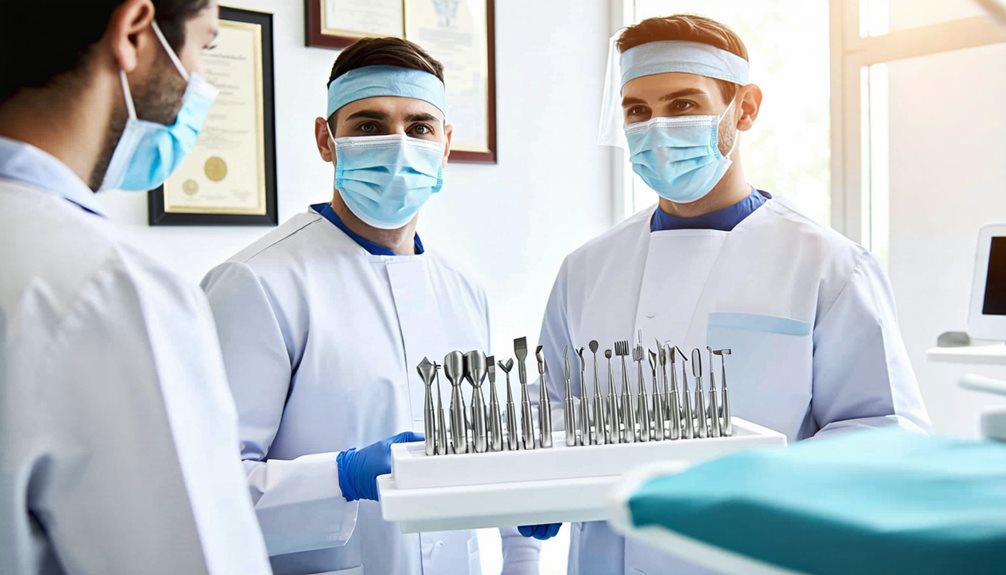
Trust in these oral surgery professionals is founded on their extensive expertise and commitment to excellence. They possess rigorous training, including specialized residency in oral and maxillofacial surgery, ensuring proficiency in advanced techniques and patient safety. Cutting-edge technology, such as 3D imaging and precision tools, enhances diagnostic accuracy and treatment outcomes. Personalized care plans cater to individual patient needs, supported by a collaborative approach and strong communication. High success rates and positive patient testimonials underscore their reliability and impact. Their commitment to innovation and continual education keeps them at the forefront of oral healthcare. Discover more about their exemplary services.
Extensive Experience in Oral Surgery
Oral surgery professionals bring a wealth of experience to their practice, often comprising years of rigorous training and hands-on experience. This broad background equips them with a sophisticated understanding of advanced surgical techniques, enabling the delivery of exceptional patient outcomes. Their expertise is not merely theoretical; it is grounded in practical, innovative solutions that address complex oral health challenges.
These professionals are adept at employing cutting-edge surgical techniques, continually refining their skills to enhance precision and efficacy. The focus on patient outcomes is paramount, as these experts prioritize not only the technical success of a procedure but also the holistic well-being of the patient.
This thorough approach guarantees that recovery times are minimized, complications are drastically reduced, and patient satisfaction is maximized. By remaining at the forefront of innovation, oral surgery professionals can implement new technologies and methodologies that revolutionize traditional practices.
Their commitment to excellence in patient care is evident in their meticulous attention to detail and their proactive adaptation to emerging trends in oral surgery. Consequently, patients receive care that is both state-of-the-art and compassionate, reflecting the extensive experience and dedication of these skilled professionals.
Specialized Training and Certification
A significant aspect of becoming an oral surgery professional is the specialized training and certification that each practitioner must undergo. This rigorous process guarantees that only those who have attained the highest levels of expertise are entrusted with the complex procedures involved in oral surgery.
Initially, practitioners complete a demanding educational journey, typically consisting of dental school followed by a residency in oral and maxillofacial surgery. This residency provides in-depth training in areas such as anesthesia, pathology, and surgical techniques, laying the groundwork for proficient clinical practice.
Beyond foundational training, continuing education is crucial for maintaining and advancing proficiency. As the field of oral surgery evolves with new techniques and methodologies, practitioners are required to stay abreast of these developments through ongoing learning. This commitment to continuous improvement is not only a hallmark of professionalism but is also essential for guaranteeing patient safety and ideal outcomes.
Credential verification is another critical component in affirming the qualifications of an oral surgery professional. Through rigorous examination and certification processes, governing bodies guarantee that practitioners possess the requisite skills and knowledge.
This verification serves as a robust assurance for patients, instilling confidence in the care they receive.
State-of-the-Art Technology
In the domain of oral surgery, state-of-the-art technology plays a pivotal role in enhancing patient outcomes and procedural efficiency.
Advanced imaging techniques, such as 3D cone beam computed tomography, provide unparalleled accuracy in diagnosis and treatment planning.
Coupled with precision surgical tools, these innovations enable oral surgeons to perform complex procedures with heightened accuracy and reduced recovery times.
Advanced Imaging Techniques
State-of-the-art imaging technology has revolutionized the field of oral surgery, offering unprecedented precision and clarity in diagnostics and treatment planning. At the forefront of this innovation is 3D imaging, a transformative tool that provides detailed visualization of the oral and maxillofacial structures.
Unlike traditional two-dimensional images, 3D imaging captures extensive data, enabling oral surgeons to assess complex anatomical nuances with remarkable diagnostic accuracy. This enhanced clarity allows for more informed decision-making, improving the efficacy of surgical interventions and optimizing patient outcomes.
The integration of advanced imaging techniques in oral surgery extends beyond mere visualization. It facilitates precise mapping of dental implants, accurate identification of pathological conditions, and meticulous planning of reconstructive procedures.
With the ability to create virtual models, clinicians can simulate surgical scenarios, anticipate potential challenges, and devise tailored solutions. This preoperative insight not only streamlines the surgical process but also minimizes risks, ensuring a higher standard of patient care.
In an era where technology continually reshapes medical practice, the adoption of cutting-edge imaging techniques underscores a commitment to innovation. Patients can trust that oral surgery professionals equipped with these tools are at the pinnacle of precision and expertise, delivering exceptional care.
Precision Surgical Tools
With the evolution of precision surgical tools, oral surgery has entered a new era where exactness and efficiency are paramount.
At the heart of this technological progression is the meticulous design of tools that prioritize tool ergonomics, guaranteeing that surgeons can maneuver with precision and ease. Ergonomically designed instruments reduce fatigue and increase control, enabling surgeons to focus entirely on the intricate tasks at hand.
Equally important is the commitment to surgical tool maintenance, a critical factor in maintaining the integrity and functionality of these sophisticated instruments. Regular maintenance guarantees that tools remain sharp, sterile, and ready for use, thereby upholding the highest standards of patient care and safety.
This dedication to maintaining and optimizing surgical tools reflects a broader commitment to leveraging state-of-the-art technology for oral surgery.
In this era of innovation, oral surgery professionals who embrace these advancements demonstrate a commitment to excellence. By utilizing precision surgical tools and adhering to rigorous maintenance protocols, they guarantee that every patient receives the highest standard of care, rooted in the latest technological advancements.
Personalized Patient Care Plans
In the domain of oral surgery, personalized patient care plans are essential for achieving ideal outcomes.
By employing tailored treatment strategies, professionals can address the unique needs of each patient, ensuring a more effective and efficient healing process.
Individual health assessments form the foundation of these customized plans, allowing practitioners to take into account specific medical histories and preferences in their approach.
Tailored Treatment Strategies
Tailored treatment strategies in oral surgery represent an essential advancement in the practice of personalized patient care plans. By focusing on customized care, oral surgery professionals are able to address individual patient preferences, leading to enhanced outcomes and patient satisfaction.
The integration of tailored treatment strategies enables practitioners to move beyond one-size-fits-all solutions and embrace a more nuanced approach.
The benefits of implementing tailored treatment strategies include:
-
Enhanced Patient Outcomes: Customized care plans focus on the specific needs and conditions of each patient, improving the effectiveness of surgical interventions and accelerating recovery times.
-
Increased Patient Satisfaction: By considering patient preferences, tailored treatment strategies foster a collaborative environment where patients feel heard and valued, leading to higher satisfaction and trust in the care provided.
-
Optimized Resource Utilization: Strategic customization of treatment plans allows oral surgeons to efficiently allocate resources, minimizing waste and improving overall clinical efficiency.
These advancements in tailored treatment strategies are reflective of an innovative shift within oral surgery, emphasizing the importance of aligning surgical practices with the unique requirements of each patient.
As the field continues to evolve, the adoption of personalized patient care plans will remain a cornerstone of modern oral surgery.
Individual Health Assessments
A cornerstone of modern oral surgery, individual health assessments form the foundation of personalized patient care plans by providing an in-depth understanding of each patient’s unique medical history, current health status, and specific oral health needs.
These assessments begin with a thorough patient evaluation, integrating advanced diagnostic tools and methodologies to guarantee a complete analysis of oral health conditions. This meticulous process allows oral surgery professionals to craft highly individualized treatment plans that not only address immediate surgical needs but also promote long-term oral health maintenance.
Utilizing cutting-edge technology, such as digital imaging and 3D modeling, these evaluations offer unprecedented precision.
These tools enable practitioners to visualize complex anatomical structures and identify potential complications before they arise, thereby enhancing patient outcomes. By combining these innovative approaches with a deep understanding of medical history and lifestyle factors, oral surgeons can anticipate and mitigate risks, tailoring interventions that align with each patient’s specific health profile.
In an era where personalized care is paramount, trusting oral surgery professionals who prioritize individual health assessments guarantees that patients receive care that is as unique as they are.
This commitment to tailored, evidence-based care empowers patients to achieve ideal oral health outcomes.
High Success Rates in Procedures
Numerous studies underscore the high success rates achieved in contemporary oral surgery procedures, highlighting the notable advancements in surgical techniques and technology.
These improvements have revolutionized the way oral health professionals approach complex cases, guaranteeing that patients receive top-notch care with minimal risk. Success measurement in this scenario involves evaluating procedure outcomes, which consistently demonstrate high levels of efficacy and patient satisfaction.
In evaluating these high success rates, several factors contribute to the impressive outcomes:
-
Advanced Technology: State-of-the-art tools and equipment, including 3D imaging and computer-assisted surgery, enable precise planning and execution of procedures, markedly enhancing success rates.
-
Expert Training: Oral surgeons undergo rigorous training, keeping abreast of the latest surgical innovations and techniques, which directly translates to improved procedure outcomes.
-
Personalized Treatment Plans: A tailored approach to each patient’s unique needs guarantees that procedures are both effective and efficient, minimizing recovery time and maximizing success.
These elements collectively guarantee that the field of oral surgery remains at the forefront of medical innovation, providing patients with reliable solutions to their dental and maxillofacial concerns.
Consequently, trusting these professionals is not only logical but also a step towards embracing cutting-edge health care solutions.
Positive Patient Testimonials
Building upon the foundation of high success rates in oral surgery procedures, patient endorsements offer compelling evidence of the positive impact experienced by those who have undergone treatment. These narratives serve as powerful trust factors, providing prospective patients with firsthand insights into the quality of care and outcomes delivered by oral surgery professionals.
In a field where patient satisfaction is paramount, endorsements highlight the transformative experiences that foster confidence and reassurance. The authentic voices of past patients underscore the efficacy and reliability of contemporary oral surgery practices.
Through detailed accounts, patients articulate how innovative techniques and personalized care have addressed their complex needs, ultimately enhancing their quality of life. These stories not only validate the expertise of the professionals involved but also illuminate the compassionate approach that characterizes their practice.
Moreover, endorsements often emphasize aspects such as the meticulous attention to detail and the advanced technologies employed, which contribute greatly to patient satisfaction. By providing a transparent glimpse into the patient journey, these endorsements bridge the gap between potential apprehension and informed decision-making.
For those seeking cutting-edge oral care, patient endorsements stand as a proof of the unwavering dedication of oral surgery professionals to excellence and innovation.
Frequently Asked Questions
What Are the Costs Associated With Oral Surgery Procedures?
The costs associated with oral surgery procedures vary considerably based on factors such as surgery pricing, procedure complexity, and geographic location. Insurance coverage often mitigates expenses, necessitating a thorough review of policy terms to optimize financial planning.
How Long Is the Recovery Period After Oral Surgery?
The recovery period after oral surgery varies but generally spans one to two weeks. Effective pain management and innovative recovery tips, such as maintaining oral hygiene and following dietary guidelines, greatly enhance healing and reduce discomfort.
Are There Financing Options Available for Oral Surgery Treatments?
Oral surgery facilities often provide various financing plans and payment options to accommodate diverse financial needs. These innovative solutions aim to guarantee accessibility and affordability, allowing patients to receive necessary treatments without undue financial burden.
Can Oral Surgery Help With Sleep Apnea Issues?
Oral surgery can address sleep apnea issues through advanced surgical techniques designed to alleviate airway obstruction. Patient testimonials often highlight significant improvements in sleep quality, underscoring the procedure’s effectiveness and transformative potential for those seeking innovative treatment solutions.
What Are the Risks or Complications Involved in Oral Surgery?
Oral surgery carries risks such as infection and complications from anesthesia. Infection prevention is essential, requiring sterile techniques and post-operative care. Anesthesia risks include allergic reactions and respiratory issues, necessitating thorough preoperative assessments and innovative monitoring technologies.
Conclusion
To summarize, the trustworthiness of these oral surgery professionals is reinforced by their extensive experience and specialized training, which are further validated by relevant certifications. The utilization of state-of-the-art technology enhances the precision and effectiveness of procedures, while personalized patient care plans guarantee tailored treatment approaches. High success rates in surgical interventions demonstrate the efficacy of their practices. Positive patient testimonials provide additional evidence of patient satisfaction and successful outcomes, underscoring the reliability and competence of these professionals in the field of oral surgery.

